H.E.A.D Competition 2026

Climate-Driven Vulnerability Assessment
of Hamilton's Urban Forest

A Ward-Level Resilience Framework
for 2030, 2050, and 2080
Susana Carolina Romero Aparicio, Su Myat Aung, Tessy Ramirez, Yi Xin
University of Niagara Falls Canada — Team #20
2
Background
275,156
City-owned trees
15
Wards analyzed
98.4%
Species-matched
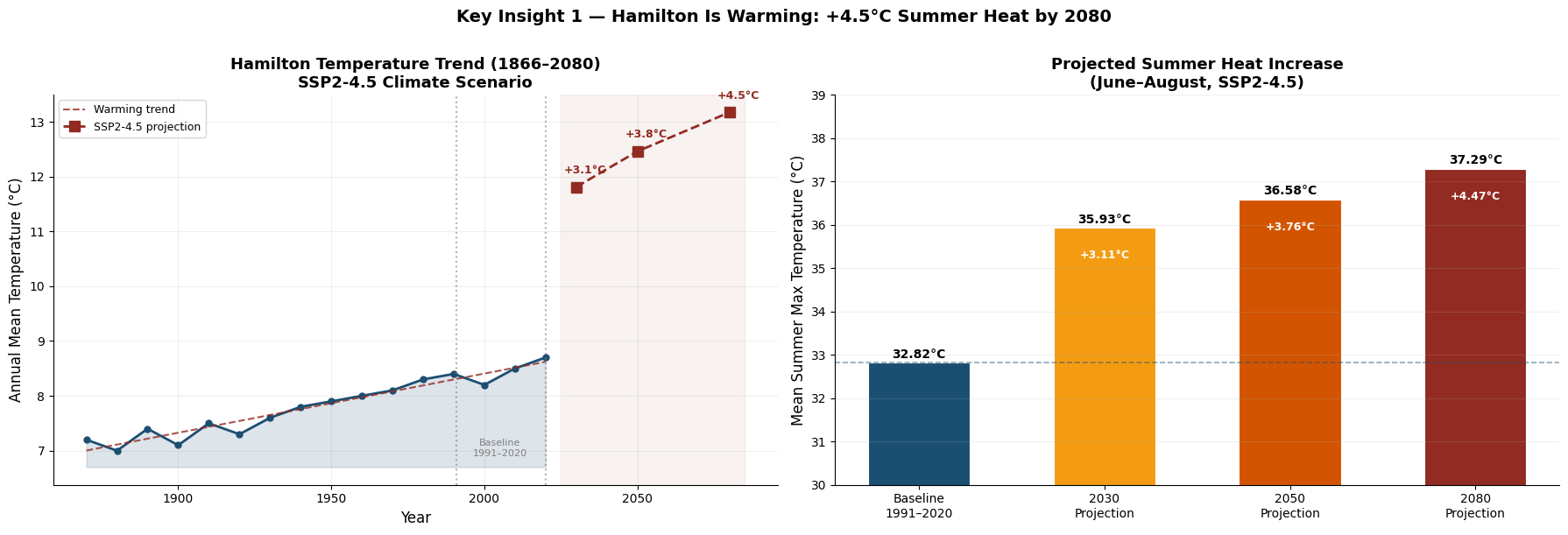
32.82°C
Baseline temp
+4.47°C
Projected increase by 2080

Data Sources: City of Hamilton Open Data Portal · GBIF Backbone Taxonomy · Metro Vancouver Urban Forest Climate Adaptation Species Selection Database · CanDCS-M6 / Canadian Centre for Climate Services · Ontario Climate Station Records
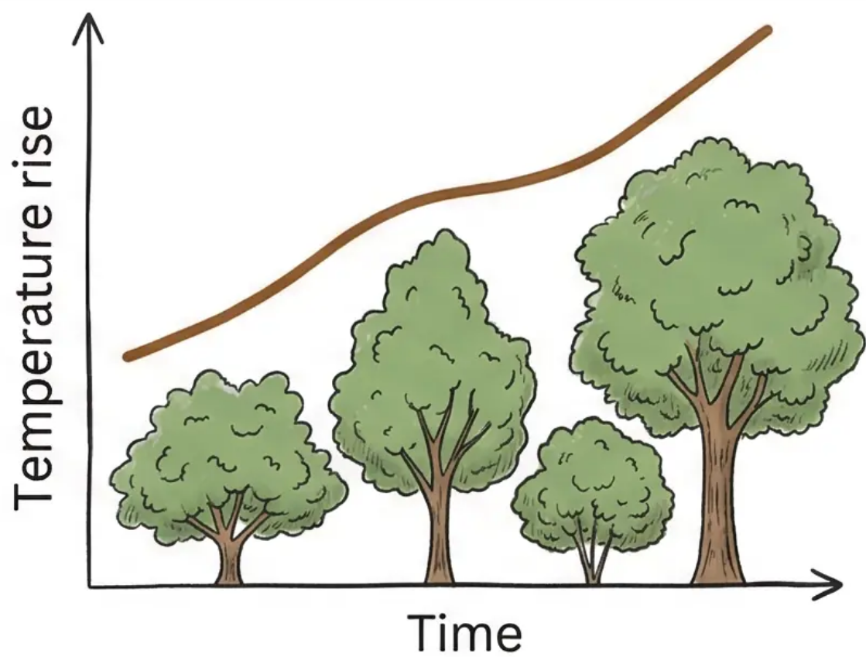
Temperature rise and urban forest illustration
3
Research Questions

RQ1: Climate Exposure

How vulnerable is Hamilton's current urban forest to future climate change?

RQ2: Species Resilience

Does current species composition provide sufficient resilience to future climate conditions?

RQ3: Spatial Risk Concentration

Which wards and dominant species exhibit the highest climate vulnerability?
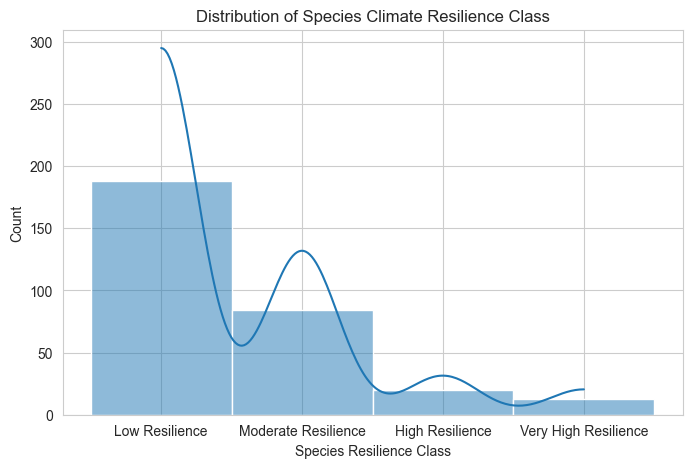
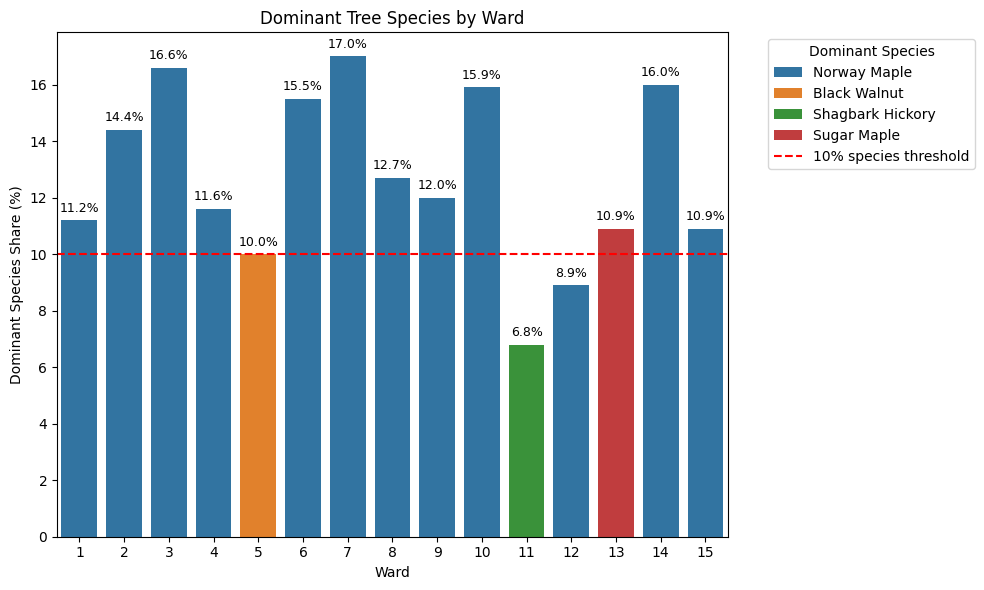
Distribution of Species Climate Resilience Class Hamilton temperature trend 1866-2080 and projected summer heat increase Dominant tree species by ward
4
Climate Change Context
5
ISA Heat Index Maps
6
Key Species Vulnerabilities
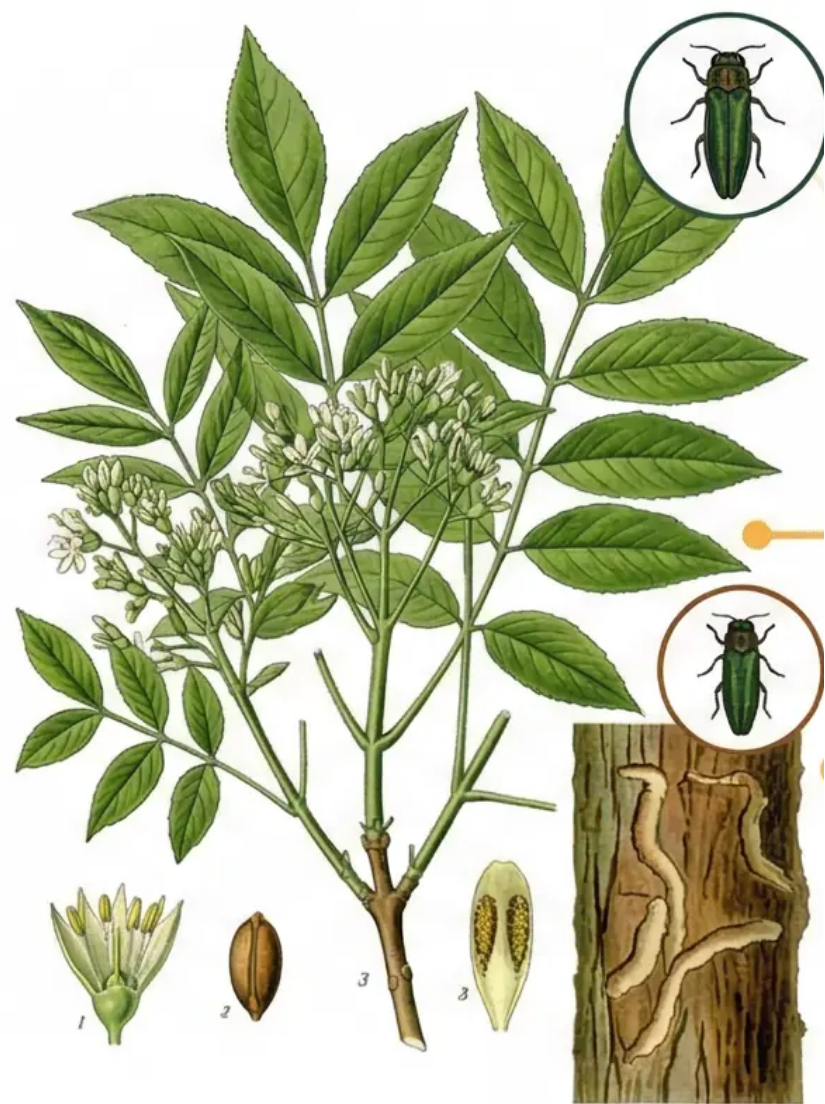
Fraxinus botanical illustration with Emerald Ash Borer

Fraxinus Species (Ash Trees)

9,170 trees (3.3% of inventory)

Highly vulnerable to Emerald Ash Borer
Excluded from recommendations

Extreme pest susceptibility eliminates future planting viability
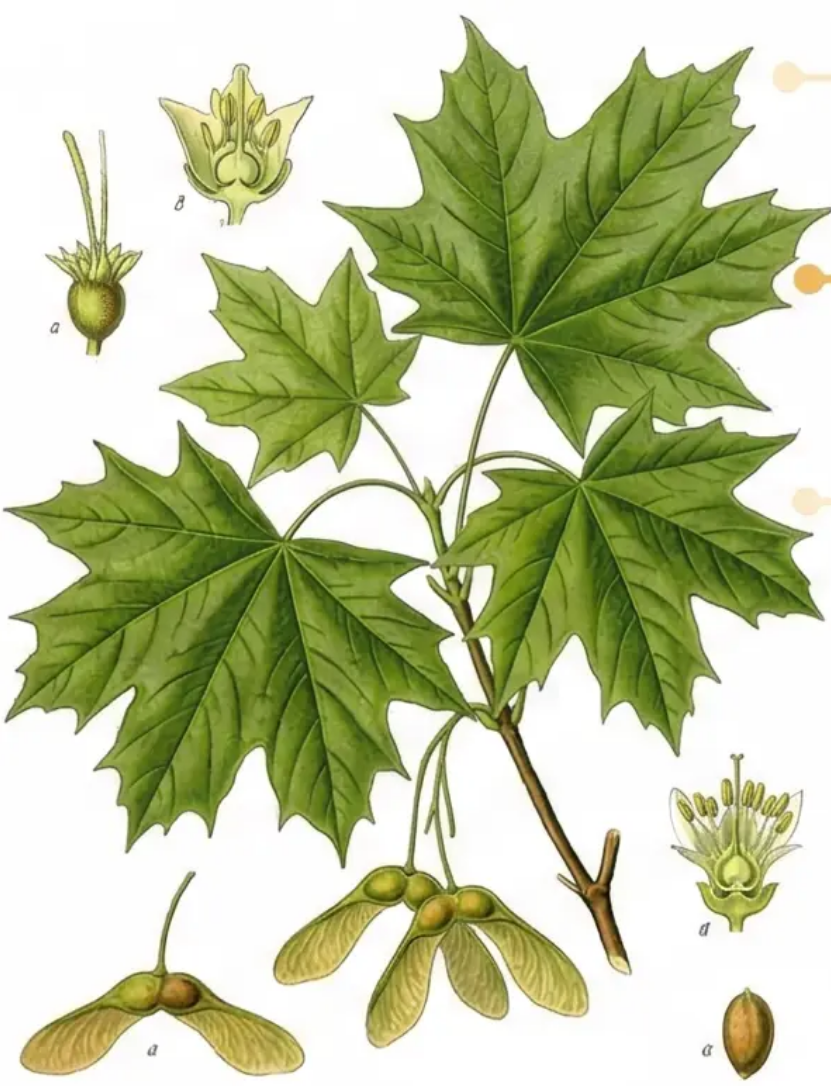
Norway Maple botanical illustration

Norway Maple (Acer platanoides)

11.9% of total urban forest

Exceeds 10% Santamour threshold
Major vulnerability contributor

Acer genus exceeds 20% threshold in 14 of 15 wards. Dominant urban species contributing significantly to overall forest vulnerability.
7
Santamour 10/20/30 Biodiversity Rule
No single species >10%  |  No genus >20%  |  No family >30%

Hamilton's Violations:

  • Norway Maple exceeds 10% species threshold
  • Acer genus exceeds 20% in 14 of 15 wards
  • Ward 4: 31% Acer dominance
  • Sapindaceae family approaching 30% limit
8
Urban Forest Replanting Priorities Framework
9
Replanting Priority Analysis
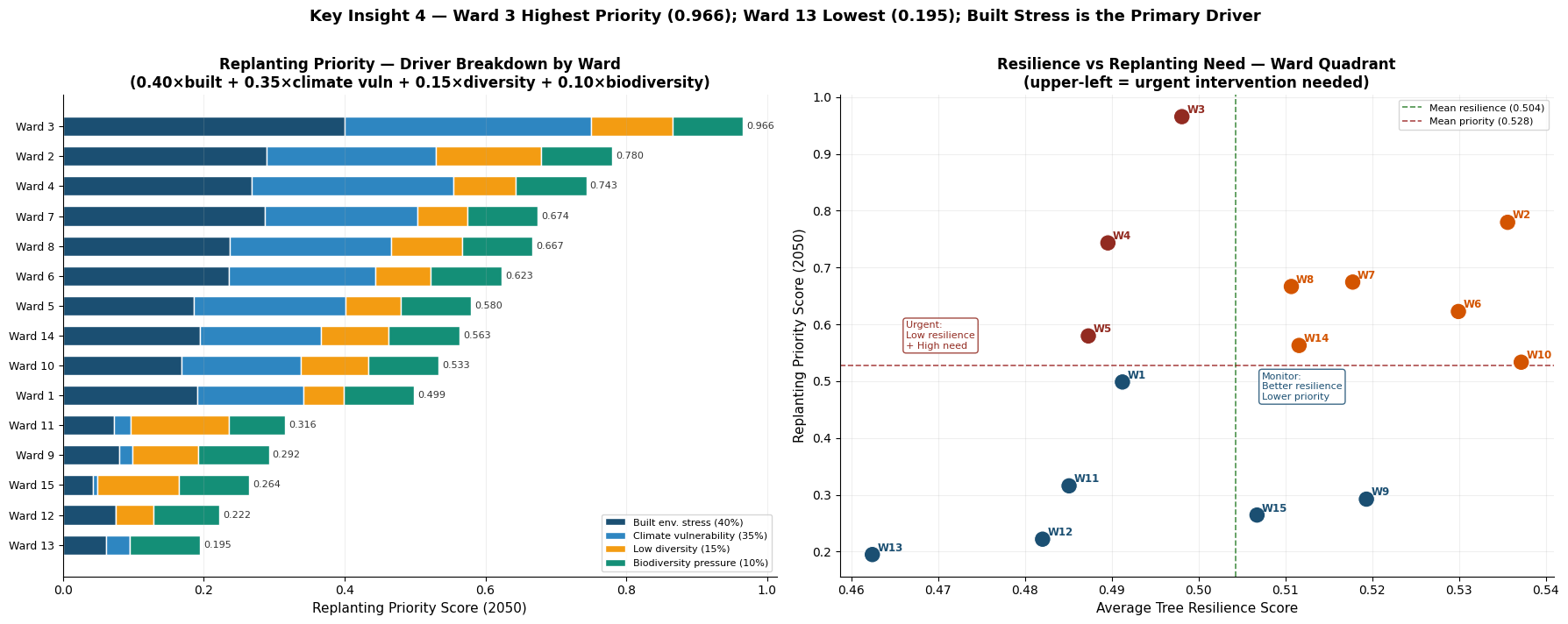
Replanting priority driver breakdown by ward and resilience vs replanting need scatter plot
10
Species Recommendation
11
Top Climate-Resilient Species Recommendations

Reduces reliance on the dominant Acer genus. Fraxinus excluded due to Emerald Ash Borer risk. Supports climate resilience and biodiversity goals.
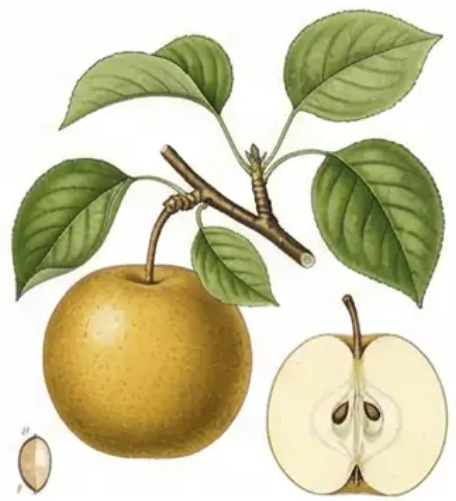
Asian Pear
Asian Pear

Resilience Score: 0.917
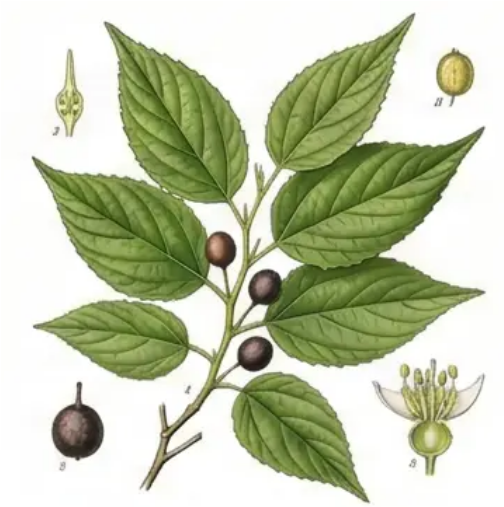
Common Hackberry

Common Hackberry

Resilience Score: 0.938
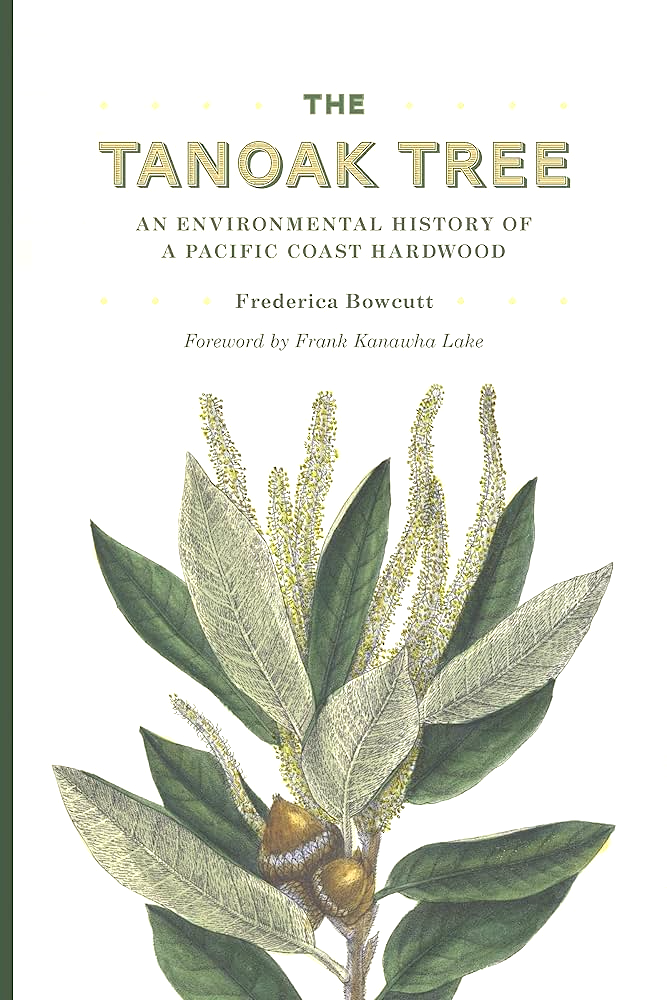
Tanoak

Tanoak

Resilience Score: 0.833
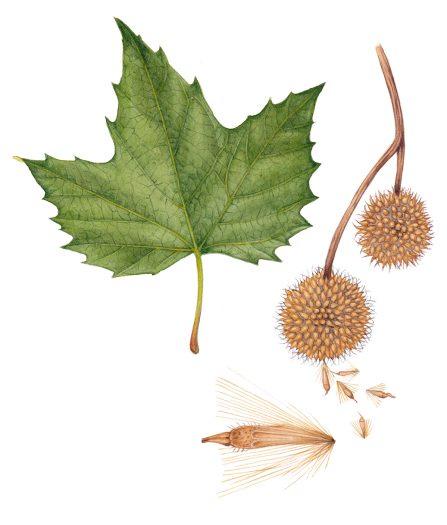
London Plane Tree

London Plane Tree

Resilience Score: 0.833
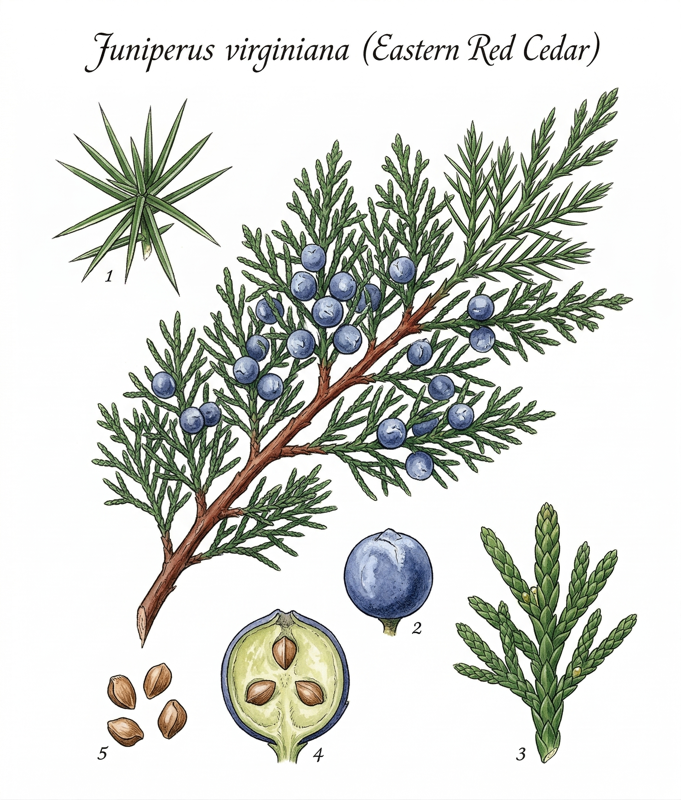
Eastern Red Cedar

Eastern Red Cedar

Resilience Score: 0.813
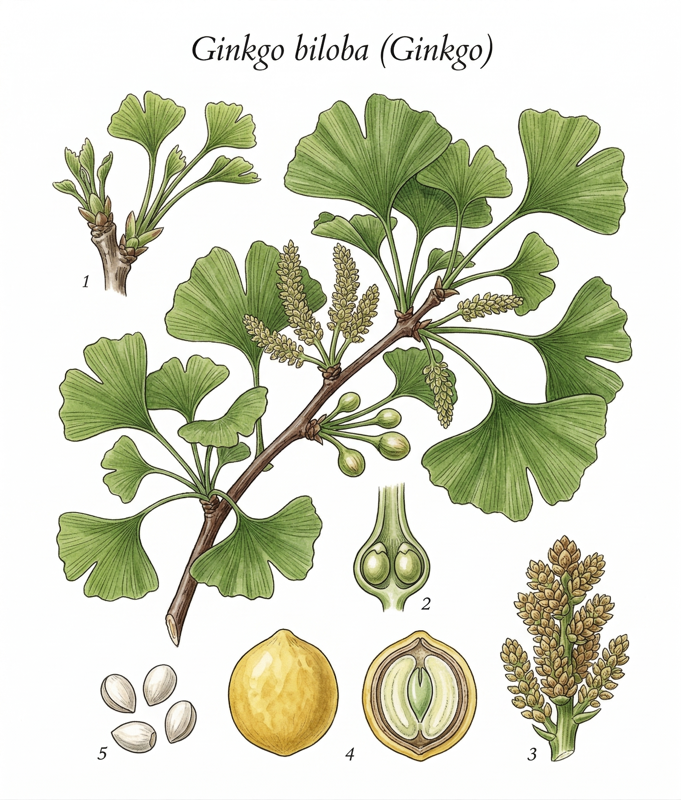
Ginkgo

Ginkgo

Resilience Score: 0.813
12
Phase 2: Canopy Coverage & Replanting Priority
18%
Urban canopy 2024
33.3%
City-owned avg
17.5%
Private land avg
40%
UFS target by 2050

Canopy by Ownership per Ward — 2024 LiDAR

State of Urban Forest Report 2026

Replanting Priority Classification — Cross-Reference Analysis

Gap = City-owned canopy % minus Private land canopy % per ward (2024 LiDAR)

ClassificationWardsCriteria
CRITICAL Wards 3, 4, 13 High public–private gap (>20pp) AND declining canopy 2021→2024. Urgent public intervention + private incentives both required.
WATCH Wards 2, 6, 7, 9, 14 High gap (>15pp) OR notable decline (>0.5pp). Proactive planting programs and monitoring needed.
STABLE Wards 1, 5, 8, 10, 11, 12, 15 Low gap or improving canopy trend. Maintain current programs and use as models for underperforming wards.

Source: State of the Urban Forest Report 2026, City of Hamilton (LiDAR survey by Airborne Solutions, 2024)
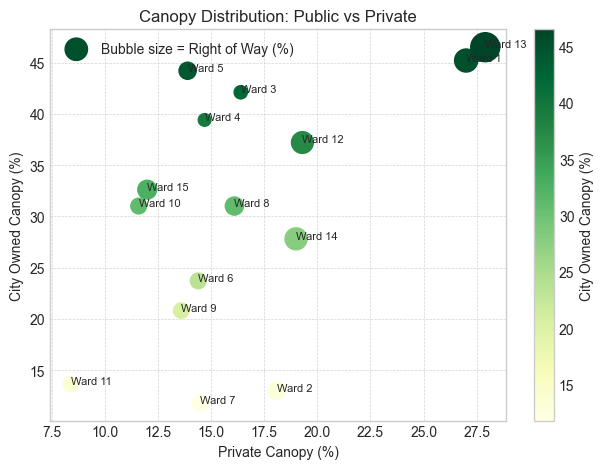
Canopy distribution: public vs private bubble chart
13
Conclusion and Recommendations
Policy framework icon

Prioritize Ward 3

Critical climate hotspot requires immediate attention — lowest resilience combined with highest replanting priority score

Species diversity icon

Diversify Species Portfolio

Implement Santamour 10/20/30 rule to reduce maple dependency and enhance ecosystem resilience
Climate and urban heat icon

Align Policy Framework

Integrate resilience scoring into City of Hamilton Urban Forest Strategy 2020 implementation

THE BIGGEST RISK to Urban Forest is NOT Climate Alone!
Strategic Climate Adaptation requires Coordinated Action Across Vulnerable Wards, Species Diversification, and Policy Integration!

14
Data Sources & References

Primary Data Sources

  • City of Hamilton Open Data Portal
  • GBIF Backbone Taxonomy
  • Metro Vancouver: Urban Forest Climate Adaptation Species Selection Database
  • CanDCS-M6 / Canadian Centre for Climate Services
  • Ontario Climate Station Records

Key References

  • Santamour, F.S. (1990). The triangle test for measuring genetic diversity.
  • IPCC AR5 WGII Chapter 19 (2014). Emergent risks and key vulnerabilities.
  • Stewart, I.D. & Oke, T.R. (2012). Local climate zones for urban temperature studies.
  • Sjöman, H. et al. (2015). Selection approach for urban tree diversification.
  • City of Hamilton Urban Forest Strategy (2020).